Description
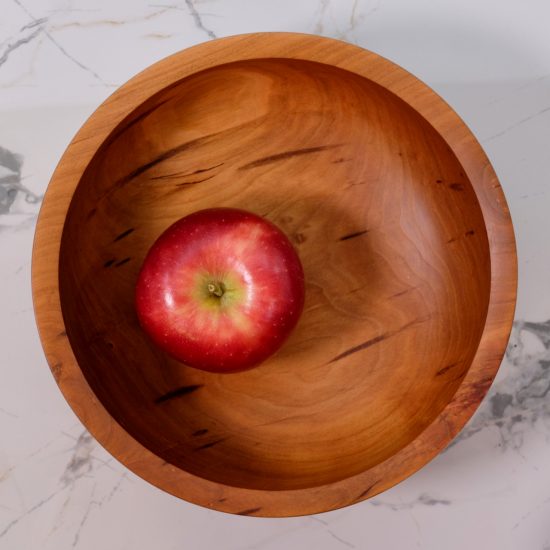
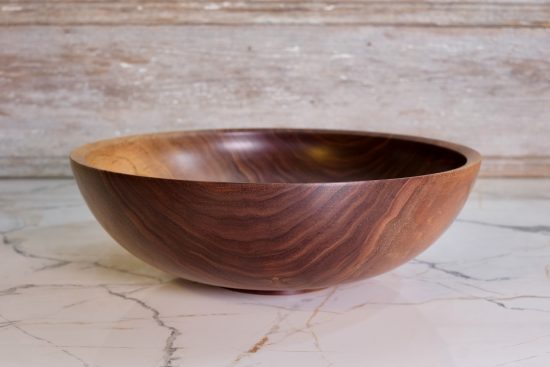
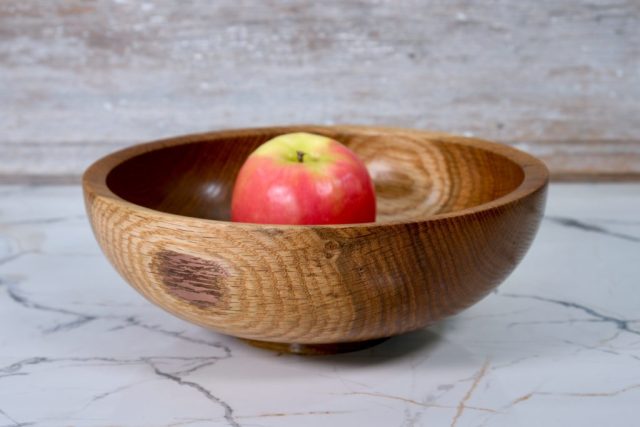
This handcrafted bowl measures 8.5″ in diameter. It has a deep, rounded form and a stylish foot that makes it appear to float above the table. Solid copper inlays add a bright accent against the dark oak. It could hold fruit, serve as a candy dish, or simply be admired as a decorative display piece. It would make a lovely gift or an objet d’art for your coffee table or bookshelf.
The rich, deep-brown color of this bowl comes from fuming, a time-honored technique of the Arts and Crafts movement of the late nineteenth and early twentieth centuries. Gustav Stickley made it famous in his Mission furniture. White oak is naturally rich in tannins, and fuming transforms those tannins into these lovely dark brown hues. The change is permanent. It is the wood itself that darkens, not a stain or dye. Few woodturners practice this age-old craft today, which makes this piece something of a rarity.
This bowl was finished with four coats of hand-rubbed, food-safe, oil/wax finish, and then buffed out with a light coat of Carnauba wax. With proper care, this bowl will last for generations. (See care instructions below…)
Bowl size: 8.5″ diameter, 3-1/8″ high
Bowl capacity: approximately 5-1/3 cups
FREE SHIPPING anywhere in the continental US.
(click on image to view full size…)
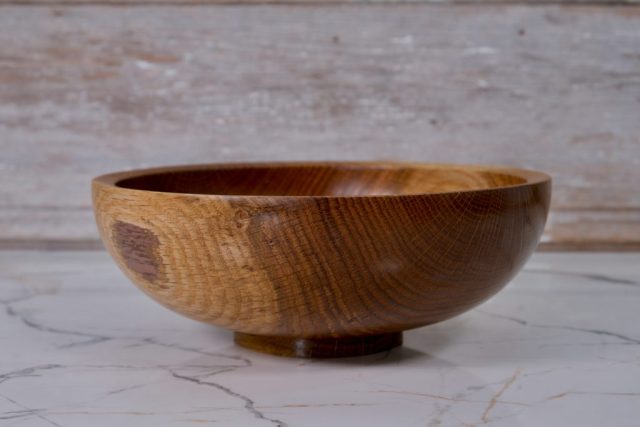
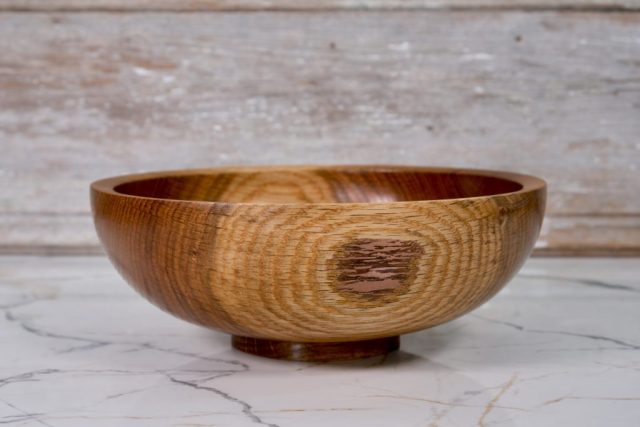
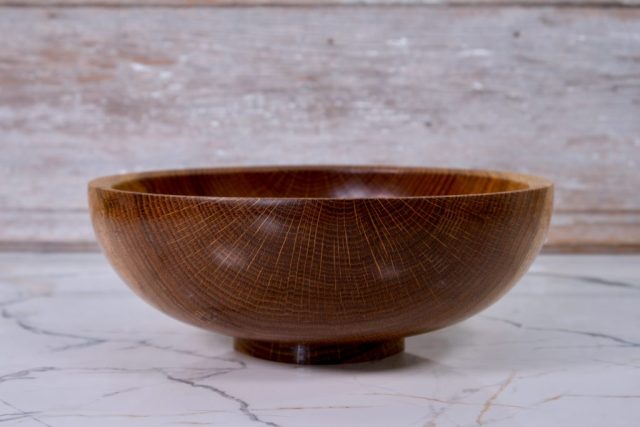
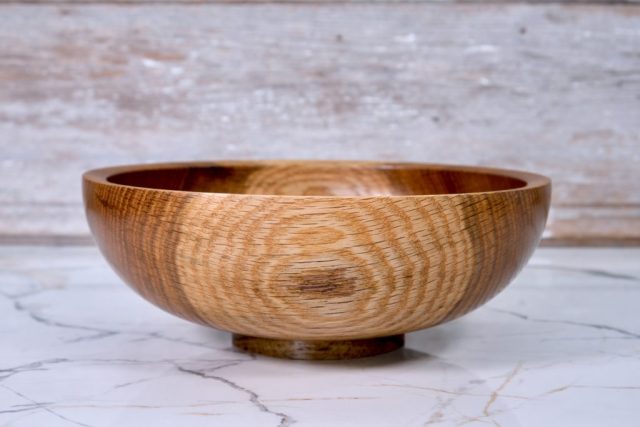
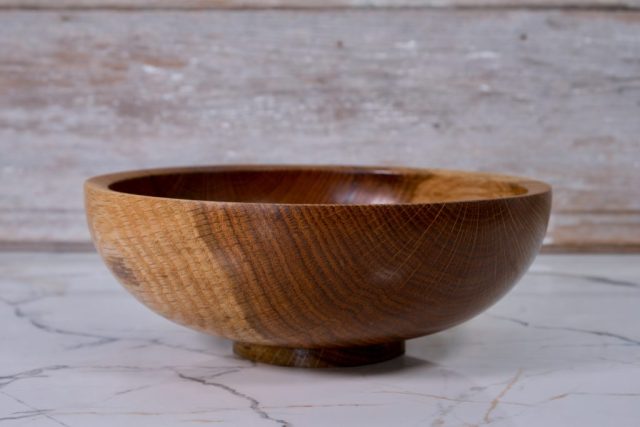
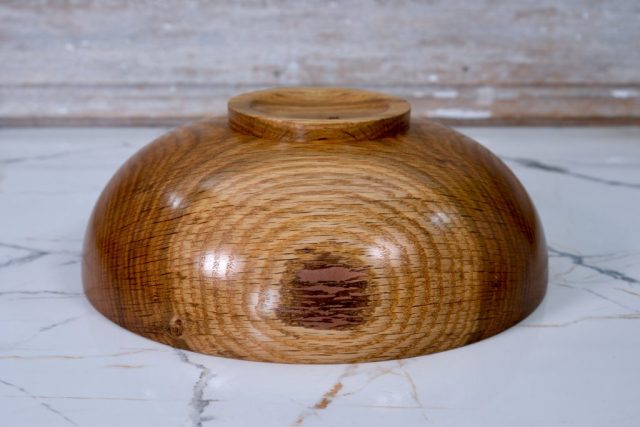
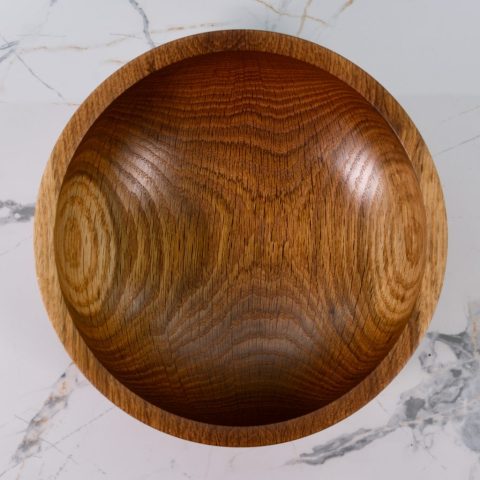
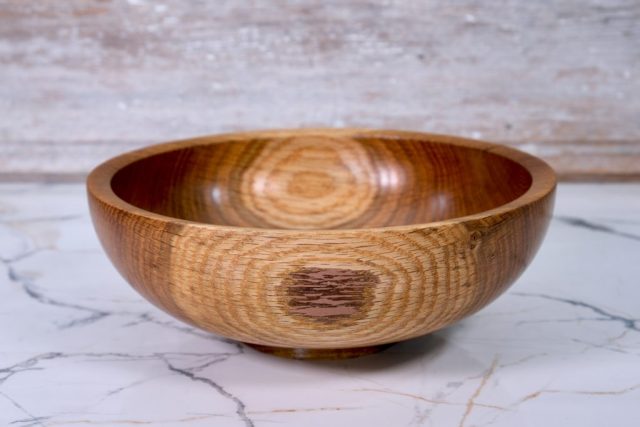
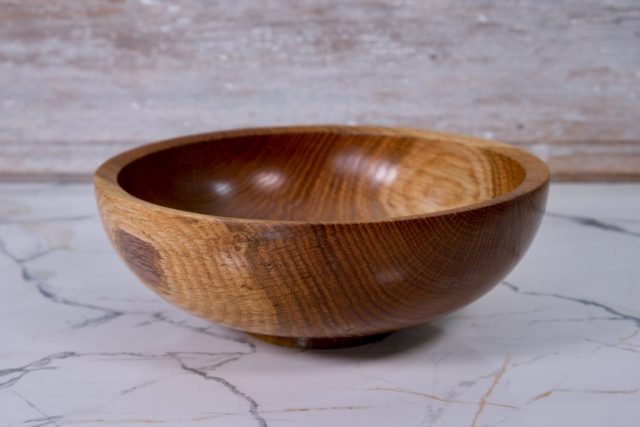
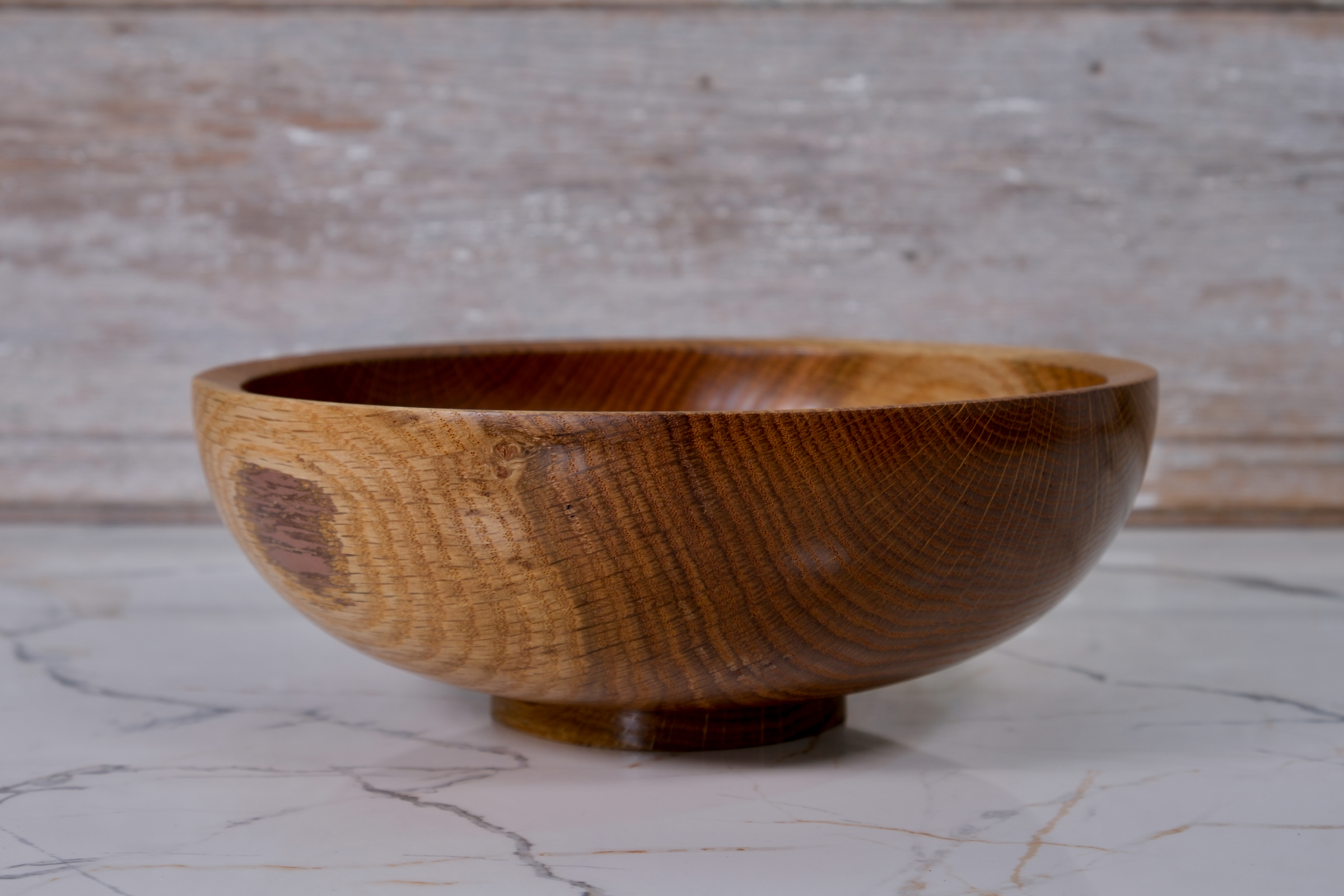


White Oak (Quercus alba) is native to the eastern United States. Its grain is straight, with a coarse, uneven texture, and quartersawn sections show prominent ray fleck patterns. Strong, rot-resistant, beautiful, and easy to work, white oak is an exceptional value to woodworkers. It’s no wonder it is so widely used in cabinet and furniture making.
Caring for Wooden Bowls
The food-safe finishes I use for bowls are water-resistant – not water-proof. Wash wooden bowls, spoons, rolling pins, and cutting boards with mild soap and warm water. Rinse and towel dry immediately.
Wooden kitchenware is not dishwasher safe and should never be left in water to soak. Excess water for prolonged periods can cause the wood to swell and crack. Also, do not put wooden bowls in the microwave. They will super-heat, split, or even catch fire.
If the wood starts to look faded or dry, rejuvenate it with a quality butcher block / cutting board oil or conditioner, such as Walrus Oil or Mahoney’s Walnut Oil or Wax. You can find these and other good choices on Amazon or at your local Lowe’s, Home Depot, Woodcraft, etc. Avoid treating the wood with vegetable oils because – unlike walnut oil – they will turn rancid. (The exception being fractionated coconut oil.)
If your woodenware sees only light use, an occasional buffing with a clean cotton cloth will be all that’s needed to keep it looking great.
I may earn a small commission if you purchase through these links.
History
This white oak grew on a friend’s property in Elkton, Maryland. I salvaged it in May 2022.
Sustainability
This wood species is not listed in the CITES Appendices, and the IUCN lists it as a species of least concern.
Epilogue
I hope you enjoy this bowl as much as I have enjoyed creating it and telling you about it. The process of turning a piece of fallen tree into a beautiful and functional bowl involves many steps and can take up to a year (the wood has to dry slowly…).
I know it takes a leap of faith when you can’t see a piece in person and hold it in your hands. All of my work is satisfaction guaranteed. If the piece is not what you were expecting, please reach out to me as soon as possible to arrange a return.
And finally, if you’re in the area (Delaware) and would like to see a piece in person, please contact me to arrange a studio visit.